definition of handyman services
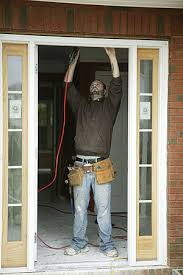
A handyman should be able to handle a number of odd jobs. George Doyle/Stockbyte/Getty Images A handyman performs a wide range of simple to complex odd jobs for individuals or groups at residential or commercial locations. As a handyman, you might work full- or part-time as an independent contractor or employee. To determine if this is the right type of work for you, you will need to know some of the duties employers expect you to perform as a handyman. Indoors A handyman provides numerous services indoors in a variety of areas, including general maintenance and cleaning, plumbing, electrical, carpentry, masonry and renovations. For example, a handyman might dispose of trash, replace light bulbs, tighten cabinetry or appliance hardware, fix leaky pipes, clean drains, test wiring, replace windows, touch-up painted surfaces, fix broken tile, and polish floors. Additionally, he might cut and lay new tile, install flooring, assemble prefabricated furniture or even custom-build new furniture or cabinets.

Outdoors Handymen also provide upkeep and maintenance to outdoor areas such as yards and landscapes, walkways and exterior buildings. For example, a handyman might clean a building exterior and gutters, and remove leaves, snow, fallen branches or other debris from walkways. He might weed gardens or flower beds. Additionally, he might repair outdoor structures and furniture damaged by weather, age or accident. Some handymen are hired to fix cracks in concrete sidewalks, replace bricks in brick walkways, remove mold from decks or repair outdoor furniture. Equipment Some handymen service equipment in and around buildings. For example, a handyman with heating, ventilation and air conditioning expertise might inspect an HVAC system before winter, clean out the air vents, replace any air or heating filters or schedule repairs, if needed. A handyman with security or fire alarm experience might test systems, report on areas that require repair, and make the repairs. Other equipment that might fall under a handyman's skill set include kitchen appliances, vehicles, computers, phone or intercom systems and landscaping gear.

Other Consideration An employer might refer to a maintenance worker or caretaker as a “handyman.”
rainbow handyman servicesBesides duties already outlined above, a maintenance worker or caretaker might perform tasks related to supplies management, such as monitoring inventory levels, ordering new supplies as needed and maintaining a log of supplies used and purchased.
home handyman perth waHe might also temporarily perform duties usually handled by other employees as the need arises.
business for sale sialkotFor example, a maintenance worker at a hotel might help take luggage to a guest’s room or set up chairs and tables for an event.
business for sale newcastle herald
References Merriam-Webster: HandymanDerbyshire County Council: Caretaker/Handy Person Job DescriptionThe Brick Presbyterian Church in the City of New York: Job Description Title: Maintenance Mechanic, Function: Handy ManFamily Real Estate Service: Weinman Rentals LLC: Maintenance/Handyman Job Description Photo Credits George Doyle/Stockbyte/Getty Images Suggest an Article Correction
business for sale pullman wahandyman N (handymen (pl)) → manitas mf () (hombre que tiene dotes prácticas para hacer trabajos de carpintería etc en casa)handyman n (-men (pl)) (paid) → tuttofare m inv;
handyman services west roxbury ma(amateur) tools for the handyman → arnesi per il fai da te 1 : a person who does odd jobs2 : one competent in a variety of small skills or inventive or ingenious in repair or maintenance work —called also handyperson

See handyman defined for English-language learners See handyman defined for kids Examples of handyman in a sentence
First Known Use of handyman : a person (especially a man) who is skillful at doing small jobs (such as household repairs) Learn More about handyman See words that rhyme with handyman Thesaurus: All synonyms and antonyms for handyman Nglish: Translation of handyman for Spanish speakers What made you want to look up handyman? Please tell us where you read or heard it (including the quote, if possible).When I was stung by the contractors board, I couldn’t believe what was happening. Here I was going out to quote a small painting job and the next thing I know this guy is handing me a ticket for contracting without a license!What did I do wrong?Legally I was allowed to do small painting jobs and I didn’t even quote the job. In fact, I told the guy right away that he’d need a licensed painting contractor because of the job size. 
Here I am thinking I’m doing the right thing and getting fined anyway!“Why are you giving me a ticket, I didn’t even quote the job?” Because you can’t advertise services that require a specific trade license. I have your craigslist ad right here.” He then goes on to list all of the services I was advertising that weren’t allowed (pretty much ALL of my services).“So, you’re telling me that I can offer these services as long as they are for jobs under $1,000, but I can’t actually advertise them?” I asked in a mocking tone.“After it was all said and done, I walked away devastated and confused with a ticket in my hand. I had just started my business a few months prior to this happening so I didn’t have the confidence I do now. I thought I was going to have to pack up shop and get another job.Luckily for me, though, one of my customers was a high end attorney that had a soft spot for helping the common man. He offered to help me out for a very reasonable price. Long story short, I ended up winning the case and went on to run a very profitable handyman business.

This worked out in the end, but it was a pain in the ass and I would’ve preferred to avoid it. So, in this article I’m going to share some tips on making sure your business is operating within it’s legal limits – one of the first steps to starting a successful handyman business.Before you start offering services as a professional handyman, it’s important to understand the laws that apply to contractors in your state. You’ll want to find out if you need a handyman license, and what you can and can’t do. Every state is different when it comes to contracting laws, so you’ll have to do some research for yourself in your specific state. I’ll go over how below.Disclaimer: I’m not an attorney, and this is NOT legal advice. This is just what I would do if I was going to start a handyman business and wanted to avoid any run-ins with the law. Seek a qualified attorney for legal advice.As a handyman, or any contractor for that matter, you are likely to have limitations on what you can do.

However, you will be asked by many customers to perform jobs outside of your legal limits. Even my return customers are always asking me to do plumbing and electrical jobs, but I turn them down.Other than to avoid a legal headache, it’s important to protect your customers. From what I understand, if your customer’s house burns down, floods, or gets damaged because of work performed by you, and you are not licensed to perform that work, their insurance won’t cover the damage. I know this isn’t that likely to happen, but it’s not something I want lingering in the back of my mind while I’m trying to fall asleep at night. Maintaining peace of mind is a critical part of actually enjoying your business.With that being said, here are the steps you should take to stay out of trouble.Like I mentioned above, every state is different. So, simply search the term “your state contractor’s board” and your local contractors board website should pop right up.Once your on the website, read about the laws that govern handyman activity in detail.

Usually there is some sort of a handyman exemption that states what you can and can’t do without an actual contractor’s license. In most states, you don’t need a license for small repairs, but in California, and possibly other states, they actually require a license (even for jobs under $500).You might find some vague laws during your research. This “gray area” is tough to mitigate because it’s interpretation is subjective. That’s why when you talk to a lawyer, they are only giving their legal opinion. Nobody knows for sure until it goes to court.So, if you want to be ultra clear, I would recommend contacting the contractor’s board and asking to speak with an actual investigator. Ask them to clear up any specific questions you might have to see how they interpret the laws. After all, they are the ones enforcing them.Most likely, the investigator you talked to hasn’t thought through all the laws in detail. When I called one in my city, it was clear almost immediately that he only had basic knowledge of the statutes.

This was frustrating because I wanted to know exactly what I could do. I know I can’t do major electrical and plumbing, but can I swap a light fixture or even change a shower head? I’m still not totally clear on this.If this happens to you, consider talking to other established handyman businesses in your area. Not only is it smart to connect with your competitors to form partnerships and help each other, but it’s great to get some inside perspective on what has been enforced in the past.As you may have already learned from my story, your marketing is often what can get you in trouble so be sure that you are abiding by all of the laws regarding advertising for home repairs.As I was getting cited in the story above, I took the opportunity to ask the investigator some questions. One thing he told me is the best place to find unlicensed contractors is to look on grocery store bulletin boards and on craigslist. This makes sense because those are the easiest places to advertise.

Not very effective, but easy, which is attractive to those who are just trying to make a quick buck.This step kind of goes without saying.Legal jargon can be difficult to understand so once you’ve thoroughly read through the laws, consider scheduling an hour with an attorney to get their opinion. A few hundred bucks is nothing when you consider the long term success of your business. Be sure to do your own research prior so you can ask good questions.I remember back when I was first learning the contracting laws in my state, it was extremely discouraging. I was very doubtful I’d even be able to run a profitable business with all of the rules and regulations. I mean, not being able to do any plumbing, electrical, HVAC, or jobs over $1,000 seemed like a business killer.But, I decided to challenge that assumption and get started anyway. I focused on offering services that I could do (which turns out is a lot), and not what I couldn’t do. Soon after, I uncovered several very profitable services that have allowed me my business and enjoy the freedom of being my own boss.