business for sale sialkot
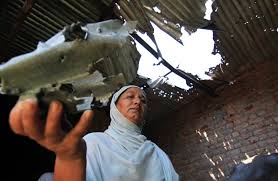
ISLAMABAD, PAKISTAN — Clashes erupted between Indian and Pakistani security forces Friday, killing at least 11 civilians and wounding scores more on both sides of the contested border, according to officials in both countries. The violence came as Indian and Pakistani leaders continued to bicker over the prospect of face-to-face talks. Indian and Pakistani security forces traded small-arms, artillery and mortar fire, damaging several villages on both sides of the border, officials said. The violence coincided with the kickoff of celebrations in India marking a half-century since the 1965 war between India and Pakistan, one of three major conflicts since 1947 between the neighbors, who now have nuclear arms. “As we mark the 50th anniversary of the 1965 war, I bow to all brave soldiers who fought for our motherland in the war,” Indian Prime Minister Narendra Modi said in a tweet. India and Pakistan accused each other of starting the latest confrontation. According to Pakistan’s military, the fighting began with the “unprovoked Indian shelling” of several Pakistani villages near Sialkot in eastern Punjab province.

The assault killed eight Pakistanis and wounded 47 others, including 24 women and 11 children, Pakistani officials said.
businesses for sale yuma county“Pakistani troops are befittingly responding,” a Pakistani statement said.
business for sale forrest victoriaIndia’s military, however, said the fighting started when Pakistani forces began firing into India’s disputed Kashmir region.
business for sale gulfport msAt least three Indian civilians were killed and 18 wounded, according to a district official in the Indian town of Ranbir Singh Pura. The Pakistani assault involved small arms and mortars, prompting a response from Indian border guards, Indian officials said. “I can only say that our security forces are alert,” India’s defense minister, Manohar Parrikar, said in an interview.

“They are taking action.” In response to the violence, Pakistan’s powerful army chief, Gen. Raheel Sharif, rushed to Sialkot on Friday afternoon to meet with victims and Pakistani border guards. His spokesman, Maj. Gen. Asim Bajwa, accused India of crossing “all limits to terrorize civilians.” “Indian firing and violation targeting civs is Highly unprofessional, unethical, irresponsible & cowardly,” Bajwa said on Twitter. Pakistani officials said the clashes began about midnight and continued for about 12 hours. If tensions persist, several Pakistani politicians and commentators said Friday, the two countries could be headed for a “limited war.” “It’s dangerous brinkmanship and could lead to wider conflict,” said Saad Muhammad, a retired Pakistani army brigadier and Islamabad-based military analyst. “They need to keep in mind that any major escalation would have disastrous consequences.” With Pakistan restricting journalists’ access to the border region, it was difficult for independent observers to assess claims about civilian casualties.

Although flare-ups along the border are common, it has been more than a year since Pakistan has claimed so many civilian casualties along the border in a single day. “It’s a large number, and it’s because there is heavy firing by Indian troops,” said one Pakistani security official, who spoke on the condition of anonymity because he was not authorized to talk to the media. A cease-fire between Indian and Pakistani security forces has nominally been in effect since 2003. But over the past two years, sudden spikes in violence along the border have become more frequent. Last August, five Indian and four Pakistani civilians were killed during a similar clash along the border. And nine civilians were killed earlier this month when fighting broke out in the same area, the Associated Press reported. India’s External Affairs Ministry lodged a formal protest with Pakistan’s high commissioner in New Delhi last week, blaming Pakistani forces for the deaths of six civilians. Pakistan’s Foreign Office also summoned the Indian high commissioner in Islamabad, angered by what officials say have been 22 civilian deaths along the Pakistani side of the border this summer.

Last week, planned talks between the countries’ national security advisers were canceled following a flurry of media statements and news conferences by both sides. Pakistan ultimately backed out of the talks after India demanded that they focus only on terrorism and not involve third parties, including Kashmiri separatists. Planned talks last summer also failed to materialize. Still, Modi and Pakistani Prime Minister Nawaz Sharif did meet briefly last month on the sidelines of a Shanghai Cooperation Organization summit in Russia. And despite the recent violence along the border, most observers doubt that the leaders of either country are willing to risk another broader war. But Western analysts remain concerned that a miscalculation by either side could quickly escalate. Annie Gowen and Rama Lakshmi in New Delhi and Shaiq Hussain in Islamabad contributed to this report. Today’s coverage from Post correspondents around the world The village is surrounded by lush green fields. A few red chimneys from brick factories, their tips blackened with soot, jut into the sky.

Flat, crumbling buildings are dotted around with windows like arrow slots. They appear to be barns or grain stores. In one of these houses in Sambrial, a few kilometers outside Sialkot on Pakistan's border with India, Shaukat is sitting on a short-legged chair next to 20 other men. He has taken off his sandals and put them next to his chair. In March, it's warm enough to work barefoot. Shaukat is a strong, 20-year-old man. He has been working for this independent stitching factory, Danayal, for eight years. Danayal produces handmade footballs for professional leagues. At one end of the room there's an old television set showing a football match, but the men aren't paying any attention to it. They're sewing and talking to each other. They find cricket far more interesting. Most of them have never played football. But Shaukat is glad that millions of people around the world like football -- maybe not in Pakistan and not really in the entire region of South Asia, but in the rest of the world.

That global love of the beautiful game has given him an income for years. At the entrance to the factory there's a notice board showing the current rates of pay. Depending on the model, his employer pays between 55 and 63 Pakistan rupees per ball ($0.65 to $0.75, €0.48 to €0.55). "On a good day I manage six balls," says Shaukat. That's eight hours work. "That's not a lot of money," he says as he pushes a needle through the thick synthetic leather and stitches together two patches. His boss is standing close by so he quickly adds: "But it's not little either." He gets paid every Saturday and has to feed a family of six with his wages. On average the people of Sialkot earn €1,000 euros ($1,370) a year, twice the national average, thanks to the sports goods industry. Manufacturers of surgical instruments, leather goods and musical instruments also contribute to the city's prosperity. All balls and surgical knives manufactured here are exported. Politicians and executives scrutinized foreign markets and adopted the standards of their Western partners.

Some 500,000 people live here -- 3 million if you include the commuter belt -- and most of them are proud of themselves and their city. The streets are better and the cars newer than in other regions of Pakistan. Sialkot has profited from globalization. There's a hill of white footballs piled up in the room next door. The material -- per ball, 20 hexagonal patches and 12 pentagons of synthetical leather plus the bladder and thread -- is supplied by the company Forward Sports. Every evening a truck comes to collect the finished balls. At present, Forward Sports is the biggest manufacturer of handmade footballs in Sialkot. It outsources to more than 100 stitching centers like Danayal. It sells the balls to German sports company Adidas for between €5 and €10 per ball, no one here wants to state the exact price. Adidas has supply contracts with other companies in Sialkot in addition to Forward Sports. It's a long route from the stitching rooms of Sialkot to the professional football pitches of Europe and America.

First you get the sub-subcontractors -- the stitching centers, the backroom workshops, the one-man businesses. Add to that the subcontractors, the transport firms, the customs offices, the sports equipment giants, the advertising industry, the sports good retailers and the department stores. The chain converts a 63-rupee ball into a product costing more than €100. Everyone wants a cut. And someone has to come up with the millions of euros for the football stars, the expensive advertising icons of the sports brands. Up to 60 Million Footballs a Year Demand for footballs is enormous, especially in years when there's a World Cup. Since the mid-1980s, Sialkot has had its own customs office, which means the manufacturers don't have to transport their goods to the port of Karachi. They call the freight center their "dry port." Last year the city opened a modern airport to allow the gentlemen from Adidas, Nike, Puma and Co to fly straight to Sialkot and to receive particularly urgently needed supplies per air freight.