business for sale gran canaria

Your first two listings are freeAfter we graduated from the TechStars Seattle program at the end of 2012, our team’s temporary U.S. visas expired, and so we were forced to re-locate away from the States. Being three British co-founders, London seemed like an obvious option, but it is of course extremely expensive to rent accommodation and office space. Needing to make our runway last until we had launched the Beta for our product, we instead spun the globe and found a cheap apartment only ten metres from the Atlantic ocean in the Moroccan surf town of Taghazout — equipped with high speed broadband and enough space for all five of us currently on the team to live and work comfortably.We relocated (again) as Dean (our CTO) has a family house that his dad is currently trying to sell so we have offered to take care of it in the meantime and work from up here and get Maptia 2.0 built. It’s probably not going to be a long term thing and as soon as we have some revenue coming in we’ll look to be relocating again (perhaps to Bali…
I miss the ocean!).David, founder of Simple as Milk:I spent the better part of 2013 traveling the world, not only for pleasure but for work too. I ended up spending around 6 months of my year abroad and the other 6 months at home in Eastbourne (the town I lived and worked in) being bored. Boredom is no inspiring thing and after a solid month of traveling around with my friends I thought enough was enough, it was time to travel full time.I made this decision by myself, for myself. I spent most of my time travelling with James, the co-founder of Simple as Milk and so I asked him to join me. We informed the team that we were leaving the next month and that was that. We sold everything and left the country on December 20th 2013 with nothing more than a backpack each.We knew our team would accept our decision and we knew everyone had the communication skills to make remote working a success. We knew there might be challenges ahead, but we had faith.Peter, founder of The Surf Office:I usually used to surf 2 or 3 weeks during the summer on the coast of France, Spain and Portugal.

I couldn’t be without my laptop because of my work and just surfing. Finding a suitable workspace with a good internet connection every second day was always a pain.
bryan's handyman serviceI’ve been working from co- working spaces in Europe and the US and I also had/have an experience with organizing surf camps, so I only put these ideas in one.
business for sale nairne saThe result was/is a new concept of a co-living and co- working space near long sandy surf spot in Las Palmas de Gran Canaria.We’d decided to become nomads around a year before we actually did.
business for sale stranraerWe had both has good careers with agencies in London as senior UX’ers, so starting our own consultancy was a natural progression.
business for sale rhone alpes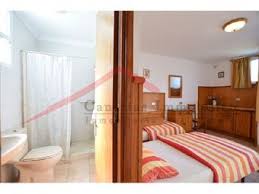
The dream of course is to build our own products. ), a community driven website for finding the best coffee shops for remote workers.
handyman service virginia beachMe and my girlfriend had originally wanted to go traveling in 2015, as it had always been a dream of ours.
bill's handyman service floridaWe were currently fulfilling one of my dreams, of working and living in London, however we both felt ready to move on a little earlier than planned. Our contract on our apartment was up in March, and so decided to pack up and leave in March 2014.We both quit our jobs. It was a pretty scary thing to do, considering how hard we worked to get to where we were.We were fortunate in that we knew exactly what we wanted to build, we had runway (thanks to the Techstars investment) so all we needed was a place to focus, with internet access and cheap living costs (surf and sunshine was a bonus).
Biggest challenge – probably in the beginning, making the leap was the hardest thing. Although I had been there to surf before, I knew very little about actually living there… we flew out there with no idea of where we were going to live, if the internet would be fast enough and a whole host of other questions. But everything miraculously fell into place, we found a beautiful/simple apartment overlooking the sea and right in front of a surf break 4MB broadband, a place where we could food shop for $10 per person per week.David on remote client work:Luckily for us we already had the company set-up in a remote way, we had perfected the art of remote working by default. James always used to work from home, Scott lives in Leicester, Kevin had already moved to Spain and the girls also live up north beyond the wall. We also spent most of our time working with US clients.We knew there might be challenges ahead with time zone differences and perhaps clients wondering if we’d be spending more time playing than working, but in the end clients just seemed to trust us from the start.

Perhaps those blog posts on remote working and our experience working with international clients just gave our clients the trust they needed. We’ve never lost a client from remote working and if anything it’s scored us more work than before.I have always tried to keep my personal stuff simple and not to buy many things. Then the decision to move somewhere is not so difficult. If you follow your passion, everything is possible.James on nomadic routine and road trip challenges:The biggest challenge we’ve had so far is staying in a routine. We’re doing the UX Roadtrip for our first year traveling, where we’re traveling across Canada and the USA, talking to UX’ers about their work and specialities. It’s turning out to be a great trip, but we find it hard to get into the normal Nomad routine since we’re hitting the road every week.Another challenge we’re facing is building our business and finding the right clients. We’re really keen to start working with disruptive start-ups, since their normally very interesting and a lot of fun to work with.

The problem is that they often don’t have a lot of cash, so it’s about finding the balance between doing the ‘standard’ UX work, to pay for the interesting projects.Finally, the big challenge we had was finding places to work. The AirBnbs we’re staying in don’t normally have desks or big tables, so we end up working in coffee shops mostly. It was a nightmare trying to find the best ones to work in when we got to a new city. For instance, the tea could be cheap, but the chairs uncomfortable and power outlets sparse. ), a community powered site which lists the best places for remote workers to get work done.Ben talks about confidence and motivation:We’ve been traveling for just 2 months, but have already put plans down to travel again — next time Europe. However this will be a different challenge, as we won’t have had a previous 3–5 years of savings to get us through. I have decided I would work as we went along, picking up various freelance ux jobs to keep us going, and keeping a steady income from a few constant clients.