business for sale basalt co
Despite the appearance of some high-profile retail spots that are currently sitting empty in Aspen’s commercial core — like the former Boogie’s Building or the longtime home to Little Annie’s Eating House — overall, the city’s vacancy rate is actually quite low, according to local appraiser Randy Gold. Gold, who’s appraised real estate in town since the late 1970s, said the number of vacancies in Aspen is “always low compared to urban markets and other communities.” He estimated that the vacancy rate for retail spaces in downtown Aspen, which includes the area from Original Street to Monarch Street and Durant Avenue to Main Street, is approximately 2 to 3 percent. The current vacancy rate for downtown office space, Gold said, is closer to about 3 to 5 percent. Gold calculates these rates by dividing the total number of occupied spaces by the total inventory available. The distinction between office and retail is that offices in the commercial core zone are not allowed to occupy the street level, which is reserved for retailers, per the city’s zoning restrictions.

Broker Karen Setterfield, who’s leased commercial spaces locally for 30 years, agreed with Gold that Aspen’s retail vacancies are “overall quite low” compared with other places. “Demand is always very strong in August or September, and I’d say it’s equal or stronger right now,” Setterfield said. “Just because somebody sees a space that’s vacant or a (Realtor’s) sign in the window” doesn’t mean negotiations and deals aren’t in the works, she added. “As this work is not visible like ongoing construction, people may not realize that commercial leasing is a process that is going on all the time, and especially at this time of the year,” Setterfield said. “Turnover is normal as leases end, business owners decide to retire or expand or relocate, and as other factors create opportunities for new retailers to lease spaces and open for business.” With that, here’s the latest in the game of musical chairs that is Aspen’s retail and business scene.

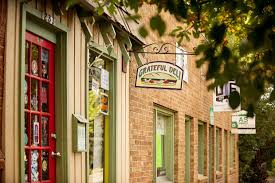
The laid-back local deli is on the market, Grateful Deli co-owner Krista Eddy said Thursday. Eddy, who co-owns the sandwich shop with her husband, Joe, said they have received “a huge response” from potential buyers after posting to the Grateful Deli’s Facebook page in late August that the business is for sale. But whether the Grateful Dead-inspired deli — or any food service, for that matter — will continue to operate in the compact space at 233 E. Main St. is up in the air.
business for sale absentee owner “We’re currently talking with several interested parties and there’s been ideas all over the board,” Eddy said.
business for sale fujairah“We’ve had some people that are interested in keeping it the same and some people that are interested in changing it.”
business for sale costa blanca south
Eddy said she and Joe have talked about selling the deli for a while and ultimately decided “it was time for a career change.” The two have owned and operated the Main Street sandwich shop together for nine years. Not much is expected to happen inside the Boogie’s Building for a while, according to a local commercial broker, aside from plans for the large indoor cycling group SoulCycle to set up a pop-up in the space December and part of January.
business for sale lichfield area Several calls to Thor Equities, the New York-based development firm that purchased the building for $27.5 million in May 2015, were not answered.
handyman services state college pa After SoulCycle’s pop-up, Thor intends to continue with plans to majorly redevelop the iconic Aspen building located at the corner of East Cooper Avenue and Hunter Street, according to a recent statement.
handyman services nyc yelp
In Boogie’s Diner fashion, future plans for the building include retail at street level and a restaurant on the second floor. What lies ahead inside the space of this former local favorite, which closed in April after 44 years of business, is still largely in question. Setterfield said she has spoken with many restaurateurs who are interested in the space, though which tenants will take over the building is up to its owners, Garfield & Hecht. Calls and an office visit to Garfield & Hecht co-owner Andy Hecht for more information were not successful. ART GALLERIES AND CLOTHING STORES An art gallery called Mountain Trails will take over the space in the Bidwell Building that the N.A. Noel Art Gallery formerly occupied, beginning Oct 1. The Bidwell Building, located at 434 E. Cooper Ave., is home to Kemo Sabe, Ryno’s Pub & Pizzeria and a few other tenants. A “young and hip” men and women’s clothing store named Kith will move into the space next door to the Bidwell Building, which was previously occupied by the Raven art gallery, according to Setterfield.

The Raven Gallery relocated across the street. Odd Molly, a women’s clothing line from Sweden, will open in the space next to the Aspen Square Hotel at 613 E Cooper Ave., where the Quintenz Gallery is currently located.VR Business Brokers located in Aspen, Colorado offers professional advisory services to buyers and sellers of privately held businesses. If you are interested in transitioning out of active ownership and management of your business, let VR find the right buyer for your business and manage the sale for you. Interested in buying a business? Let us find the right business for you to buy and guide you through your acquisition. At VR, we help sellers unlock value, and we help buyers acquire their dreams. As state after state has legalized marijuana in one way or another, big names in corporate America have stayed away entirely. Marijuana, after all, is still illegal, according to the federal government. But Microsoft is breaking the corporate taboo on pot this week by announcing a partnership to begin offering software that tracks marijuana plants from “seed to sale,” as the pot industry puts it.

The software — a new product in Microsoft’s cloud computing business — is meant to help states that have legalized the medical or recreational use of marijuana keep tabs on sales and commerce, ensuring that they remain in the daylight of legality. But until now, even that boring part of the pot world was too controversial for mainstream companies. It is apparent now, though, that the legalization train is not slowing down: This fall, at least five states, including the biggest of them all — California — will vote on whether to legalize marijuana for recreational use. So far, only a handful of smaller banks are willing to offer accounts to companies that grow or sell marijuana, and Microsoft will not be touching that part of the business. But the company’s entry into the government compliance side of the business suggests the beginning of a legitimate infrastructure for an industry that has been growing fast and attracting lots of attention, both good and bad.

“We do think there will be significant growth,” said Kimberly Nelson, the executive director of state and local government solutions at Microsoft. “As the industry is regulated, there will be more transactions, and we believe there will be more sophisticated requirements and tools down the road.” Microsoft’s baby step into the business came through an announcement on Thursday that it was teaming up with a Los Angeles start-up, Kind, that built the software the tech giant will begin marketing. Kind — one of many small companies trying to take the marijuana business mainstream — offers a range of products, including A.T.M.-style kiosks that facilitate marijuana sales, working through some of the state-chartered banks that are comfortable with such customers. Microsoft will not be getting anywhere near these kiosks or the actual plants. Rather, it will be working with Kind’s “government solutions” division, offering software only to state and local governments that are trying to build compliance systems.

But for the young and eager legalized weed industry, Microsoft’s willingness to attach its name to any part of the business is a big step forward. “Nobody has really come out of the closet, if you will,” said Matthew A. Karnes, the founder of Green Wave Advisors, which provides data and analysis of the marijuana business. “It’s very telling that a company of this caliber is taking the risk of coming out and engaging with a company that is focused on the cannabis business.” David Dinenberg, the founder and chief executive of Kind, said it had taken a long time — and a lot of courting of big-name companies — to persuade the first one to get on board. “Every business that works in the cannabis space, we all clamor for legitimacy,” said Mr. Dinenberg, a former real estate developer in Philadelphia who moved to California to start Kind. “I would like to think that this is the first of many dominoes to fall.” It’s hard to know if other corporate giants have provided their services in more quiet ways to cannabis purveyors.
New York State, for instance, has said it is working with Oracle to track medicinal marijuana patients. But there appears to be little precedent for a big company advertising its work in the space. It is still possible — though considered unlikely — that the federal government could decide to crack down on the legalization movement in the states. The partnership with Kind is yet another bold step for Microsoft as its looks to replace the revenue from its fading desktop software business. On Monday, it announced that it was buying LinkedIn. Microsoft has put a lot of emphasis on its cloud business, Azure. The Kind software will be one of eight pieces of preferred software that Microsoft will offer to users of Azure Government — and the only one related to marijuana. The conflict between state and federal laws on marijuana has given a somewhat improvisational nature to the cannabis industry. Stores that sell pot have been particularly hobbled by the unwillingness of banks to deal with the money flowing through the industry.

Many dispensaries have been forced to rely on cash for all transactions, or looked to start-ups like Kind, with its kiosks that take payments inside dispensaries. Governments, too, have generally been relying on smaller start-ups to help develop technology that can track marijuana plants and sales. A Florida software company, BioTrackTHC, is helping Washington State, New Mexico and Illinois monitor the marijuana trade inside their states. Kind has no state contracts. But it has already applied, with Microsoft, to provide its software to Puerto Rico, which legalized marijuana for medical purposes earlier this year. Twenty-five states have now legalized marijuana in some form or another, with Pennsylvania and Ohio the most recent. The biggest business opportunity, though, will come from states that allow recreational use of the drug, as Colorado, Oregon and Washington already do. This fall, five states — including, most significantly, California — will vote on whether to join that club.