business for sale agadir
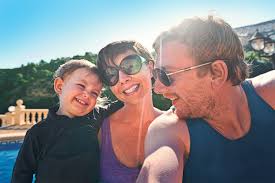
Perfect year-round weather, beaches to die for and prices that won’t break the bank balance; this pretty much sums up what Morocco’s premier resort Agadir is all about. Agadir promises more than 300 days of sunshine a year, plenty of the sandy stuff – 10 kilometres in all – and beautifully warm waters that are enticing even in the depths of winter. And because this city was destroyed in an earthquake back in 1960, you can expect a modern resort built specifically with the tourist in mind, complete with five star hotels, self-catering apartments and a beachfront packed with bars, cafes and restaurants galore. And when you’re not relaxing on the beach or ordering cocktails from the bar of your hotel pool, you’ll probably be taking some jet-skis out for a spin, driving some quad bikes into the desert, or having a go at a spot of camel trekking. Oh, and let’s not forget those golf courses – all three of them! Souk El Had (Rue 2 Mars) is one of the biggest markets in Morocco.
The vendors sell a vast range of goods, including fresh fruit and vegetables, fragrant herbs and spices, silver, ceramic and leather crafts. Part of the shopping attraction is the opportunity to interact with the local people and haggle over prices.
handyman services north yorkshire Get a wonderful bird's-eye view of Agadir from the old Kasbah.
spencer handyman servicesOnly the walls of the ancient town remain as a memorial to the thousands who died in a devastating earthquake in 1960.
handyman service montrealThe hillside below lights up at night with fluorescent Arabic writing that translates as "God, King and Country".
handyman services in stone mountain ga
The hillside below lights up at night with fluorescent Arabic writing. La Vallee des Oiseau is a mini-zoo, home to a collection of small mammals and birds. Located between Boulevard Hassan II and Boulevard du 20 Aout, it provides an interesting walk in the centre of town and is open daily from 9am-6pm. Admission is free.
fixer upper houses for sale in nj Taghazout (20km north of Agadir, bus route no.32) is a small Berber fishing village.
business for sale buxton victoriaSurrounded by beautiful, sandy Atlantic beaches, the village is very popular for surfers and sun worshippers. The local houses, shops and restaurants are full of character. Just 30km from Agadir, in the foothills of the Atlas Mountains, lies the exotic Paradise Valley. For the more energetic it is possible to take a guided trek to spectacular rock pools.

Excursions can be organised through local agencies. The Souss-Massa National Park stretches along the coast for more than 80km south of Agadir. There are many beautiful beaches, villages and fishing harbours to visit within the park, making a day trip well worth the effort. The best way to enjoy the natural beauty of the Souss Massa National Park is by jeep safari. You may be lucky enough to spot the rare bald ibis bird, which only breeds in this area of Morocco. Réservez sur le Formulaire ci-contre Quelles que soient votre compagnie aérienne, ou votre classe de voyage, vous pouvez accéder aux salons « Convives de Marque » des aéroports du Maroc.Ces salons proposent un bon nombre de services (prestations de bouche, un espace de travail équipé, …) pour se détendre avant votre embarquement ou votre départ de l’aéroport.Les aéroports de Casablanca, Rabat, Marrakech, Agadir, Tanger, Fès, Oujda, Dakhla et Laâyoune sont gérés depuis le 1er janvier 2017 par un opérateur international mondialement connu et reconnu « National Aviation Services (NAS) ».

Casablanca - Mohammed V Airport Marrakech - Ménara Airport Please fill in the following fields :Ripe, yellow argan berries fall to the ground in the courtyard of the Ajddigue women’s argan co-operative in the village of Tidzi, 25km south of Essaouira. Under the argan trees handmade beauty products are on sale. Khaltoum Alta, who has worked at this co-op since 2005, deftly smashes a dried nut shell on a stone, discarding the bitter kernel and picking out the almond heart of the argan fruit. “I’m the sole earner in my family after my father died in 2011,” she says. “My job here has allowed me to look after my mother, sister and little brother. He will be starting at university in Agadir in September; without my wages he wouldn’t be able to – he needs at least 500 dirham a month for his rent and food.” Ajddigue – which means flower in the Amazigh Berber language – is one in a network of 30 co-operatives that, since 1996, have been turning Morocco’s “gold” into a thriving business that is changing women’s lives.

It is not only giving them money and access to international markets, it is also giving them status and turning traditional views about the role of women in society on their head. When pressed, the argan tree’s fruit produces a luxurious oil which is rich in fatty acids, omega-6 and vitamin E. Argan is said to help treat many skin and hair conditions. Over the past 20 years, a movement of women’s co-operatives has developed to gather and process the argan nuts to use in everything from face cream to massage oil to nut butter. In 2015, Morocco produced about 4,000 tonnes of the oil, about a third of which was exported. A litre of pure argan oil can fetch as much as €25. The co-operatives have been immensely successful and much of the produce is now bought by large global beauty brands including L’Oréal and Aveda. The Body Shop in the UK works with the Targanine network of co-operatives from where it sources organic argan oil for body butter, face creams and bath foams.

“The best thing about argan is that all parts of the tree can be used, and it’s something that’s just here for free, local and special to Morocco,” says Zoubida Charrouf, a lecturer at Mohammed V University in Rabat. After completing her PhD researching the qualities of the argan tree in the early 1980s, she started to look at ways to commercialise the oil production, which resulted in the cooperatives. “The leaves are fed to goats, the discarded kernels are used for fuel for cooking and of course the oil has been found to have excellent health benefits.” Each hectare planted with argan trees can generate about €400 a year – a significant sum for remote villages in the Agadir region. National income per capita in Morocco is about €3,000. “I can buy gas for cooking now, electricity for my home – I even bought a fridge,” says Alta. The co-operatives have also been used as a base to educate and empower women. “In the beginning men did not want their women to go out to work,” says Charrouf.

“We had to really encourage the women, giving them confidence to deal with budgets and sale prices, and to teach them to negotiate with international buyers.” Alta, who like many women in the region was never sent to school, has learnt to read and write Arabic and do basic maths. The Ajddigue women regularly consult buyers in France, Japan and Canada, processing orders for refined argan oil. “We set the price. We process the orders over the phone or on the internet, then we package it up and sent it directly from the post office to our customers,” says Bouchra Amcher, another member of the co-operative. “There’s no middle man involved, no one to come and take our products for nothing and who will sell our products at a huge mark-up to international companies.” Ajddigue is one of three co-operatives in Charrouf’s network to have gained a certificate for Fairtrade and organic production. The women produced 16 tonnes of argan oil last year and had a turnover of 1.7m dirhams (£120,000).

Profits are shared between the co-operatives’ 60 women according to the amount of oil they produced. Argan trees also play a crucial role in the battle against desertification in this arid region where rainfall has become more erratic due to climate change. Charrouf’s research in the 1980s showed the benefits of argan forests – the trees have deep roots, which means they can reach deep pockets of groundwater, and help stabilise the soil. In the 1970s argan trees were being lost at a rate of 600 hectares a year, but the success of the co-operative movement has halted deforestation. There are now more than 800,000 hectares (2m acres) of argan forests in Morocco, with the government planning to plant another 200,000 hectares. “For me, the biggest success has been women’s empowerment, both economically and socially,” says Charrouf. “Our co-operatives have ordinary female members from marginalised communities who have gained credibility. They’ve shown they can work with big international companies, they’ve spoken to ministers.